









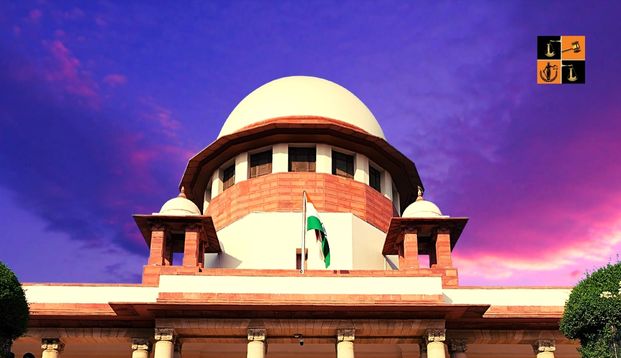
A panel advocate's decade long professional nightmare, triggered by his inclusion on a banking industry blacklist, has reached the nation's apex court, raising a question with sweeping consequences for thousands of empanelled lawyers across India.
The Supreme Court has reserved judgment in a special leave petition filed by a lawyer challenging his inclusion on the Indian Banks' Association (IBA) Caution List, a register circulated to banks and financial institutions flagging individuals allegedly linked to loan fraud. A bench comprising Justice P.S. Narasimha and Justice Alok Aradhe took up the petition after the Allahabad High Court refused to entertain the advocate's challenge, leaving a consequential question unanswered: does the IBA possess the legal authority to effectively end a lawyer's career through a blacklist, or does that power belong exclusively to the Bar Council of India?
The petitioner, who served as a panel advocate for Syndicate Bank (since merged into Canara Bank), was placed at serial number 781 on an IBA Caution List dated February 5, 2020, on allegations that he had facilitated financial fraud. The bank's case was that he issued a defective search and title report for an immovable property offered as loan security, specifically, that he omitted to disclose that a portion of the property had already been transferred by the borrower, thereby exposing the bank to unrecovered credit risk. The lawyer's counter is procedural and substantive: he contends that his name was added to the list, hosted publicly on the IBA's website, without any prior notice, without an opportunity to be heard, and in violation of the Reserve Bank of India's own 2009 procedural guidelines governing the reporting of third parties to the IBA.
The fallout has been severe, multiple banks terminated his empanelment, triggering financial losses and, he argues, an infringement of his fundamental right to practise his profession. When the Allahabad High Court dismissed his writ petition on maintainability grounds, holding that the IBA does not qualify as "State" under Article 12 of the Constitution, he escalated the matter to the Supreme Court.
During the hearing, Amicus Curiae and Senior Advocate Maninder Singh sided with the petitioner on the core jurisdictional issue, arguing that the IBA list directly violates an advocate's right to practise. He pressed the point that the Advocates Act vests disciplinary authority over lawyers exclusively in the Bar Council of India, making any parallel punitive mechanism by a trade body constitutionally suspect. Advocate Radhika Gautam, representing the BCI, and Additional Solicitor General Archana Pathak Dave, for the Union Law Ministry, endorsed this jurisdictional position. The bench's most pointed intervention came from Justice Narasimha, who raised concerns about whether the BCI and State Bar Councils are, in practice, equipped to handle professional misconduct cases effectively, a remark that cut to the heart of why institutions like the IBA may feel compelled to create their own deterrents.
"The petitioner's name was placed on the Caution List without prior notice, without affording a fair opportunity of hearing, and without any detailed examination or investigation into the alleged fraud.", Petitioner's submission, as recorded before the Supreme Court bench.
The bench thereafter reserved its judgment in the SLP, with the operative order to follow.
Picture Source :




















